Entries Tagged 'Anecdotal musing' ↓
May 14th, 2008 — Anecdotal musing

Originally I trained as an accountant, not because I wanted to be an accountant but because I wanted to learn as much as possible about business before starting my own. This I did in July 1978 when I opened one of the first computer stores, Microdigital, in Liverpool. As home computing rapidly took off I found myself over trading and around 1980 sold out to Laskys, the retail side of the Ladbroke Group. We then expanded by putting stores within stores in their Hi Fi shops and they put me through their management training mill at Carewell Lodge, near to Lingfield Race Course.
I could have ended up in retail for ever except for a dispute I had with my boss, the managing director of Laskys. Basically I created a business plan then generated weekly reports for them and attended monthly metings at head office in London with the board of directors. The problem was that we were doing far too well and vastly exceeding the planned turnover. We had become the biggest home computer retailer in Britain by some margin. I had my staff working silly amounts of overtime (and asking to do less) to keep up because they wouldn’t allow me any more people.
This came to a head in one of the monthly meetings with the board in London. I pointed out that our turnover was several times plan and that we desperately needed more staff. The managing director asked me if I had ever heard of overtime so I asked him if he had ever looked at my weekly reports which clearly showed such information. But he wouldn’t budge and I went home with empty hands. I seriously think that we were outperforming his Hi Fi business so much that he was embarrassed and wanted to keep our wings clipped.
So I went up to Liverpool and put all the prices up. Turnover dropped and my staff got to see their families again.
Next time I went to see the board in London they were most concerned at the drop in turnover. I told them that it was deliberate and as it was still well above plan there was nothing to worry about. They nearly fell off their chairs. And I got to negotiate a severance package.
My consolation was twofold, I found myself in demand for consultancy and the Laskys home computer business collapsed. One of the firms I consulted was one of the very first British video game publishers, Bug Byte, who had employed two of my ex employees from Microdigital, Mark Butler and Eugene Evans. They had recommended hiring me to help with the marketing. Whilst there I came up with the Bug Byte bug logo and changed their packaging from what is at the top of this article to the 4 colour inlay with air brushed illustration that became the template for 8 bit cassette games.
This was the pivotal moment in my career. The point at which I became a part of the video game industry. Since then my career has been both in personal computing and video gaming. But it is video gaming that has been the most exciting.
I had also consulted for a furniture manufacturer and office equipment supplier, Dams, on the Kirby Industrial Estate outside Liverpool. They employed a guy from Manchester called Ian Hetherington.
Then in 1982 Mark Butler left Bug Byte with David Lawson to form Imagine Software, they asked me to join them as operations manager and Eugene Evans also moved over. After a couple of months I persuaded Mark and David to employ Ian Hetherington. When Imagine became a limited company I was made operations director with most of my efforts being put to running sales and marketing. Ian Hetherington was made financial director.
You can read more on here about those early days in Piracy, Imagine Software and the Megagames, I Found an old CV and Gaming Desperately Needs Celebrities.
May 13th, 2008 — Anecdotal musing

The ZX Goldenyears web page about the early days of the industry in Liverpool has stopped working. Luckily it is still in the Google cache. I am copying it here so it doesn’t get lost:
Before the 1980s if you wanted to buy a computer off the shelf it would set you back more than £500 (a king’s ransom in those days) and would have probably been imported from the States. Therefore, most budding computer owners built their own, after all, if you held an interest in computers you were probably an electronics nut anyway, used to building radio sets and calculators. Or maybe you’d be an academic or science professional, since the only people lucky enough to use a ‘real’ computer were those who worked in large universities or research institutes. These early machines may not sound attractive, but it would be foolish to believe that there was no market for them.
In the late-Seventies, Bruce Everiss was an accountant with an interest in computers. He had already set up a computerised book-keeping company called Datapool Services in Liverpool, when he began to make plans to open a computer shop in the city. The computer press of the time was limited, to say the least, but stories about new systems from the other side of the Atlantic persuaded Everiss that this was a market on the brink of something special. “So I begged, borrowed and stole so I could rent a shop. We opened in July 1978.”
To begin with Microdigital stocked Apples, NASCOM and S100 machines. Then came the Science of Cambridge SC/MP 2, HP 85 and Commodore PET. Mountains of books were sold too, satisfying enthusiasts’ thirst for knowledge. There was even a repair service for home kit builders and a magazine called Liverpool Software Gazette. It was a place where teenagers were encouraged to come on a Saturday morning to play with new technology, and where budding computer owners could finally buy across the counter rather than by mail order, with its inherent lack of customer service.
It was an exciting time for Everiss; at the tender age of 22 he was presiding over a landmark in British computing and in such a small pond he was able to make a big splash. This was typified by the time that he announced to anyone who would listen that he would not be stocking Acorn’s new Atom computer due to the manufacturers’ production problems. His outspoken behaviour led Personal Computer World to describe him as ‘incorrigible’ and would earn him a reputation within the industry as a man apt to make memorable pronouncements.
It wasn’t just people looking to part with cash who were coming through the door, there was also an army of young enthusiasts who were eager to join the staff and sell these amazing new machines. And it was this group of employees that would come to form the basis of Liverpool’s remarkable computer scene.
Within two years of its opening the company had expanded to a point where Everiss was finding it difficult to manage with so little business experience. One of Microdigital’s customers was Alan Sterling, a director of the hi-fi chain Lasky’s, and he offered a solution. As Everiss explains, “They made me an offer I couldn’t refuse. We set up stores within stores nationally for them and then integrated into their mainstream.”
Many of the Microdigital staff moved on to set up a software company called Bug Byte, while Everiss spread his talents around. He approached publishers Felix Dennis with the idea of a trade magazine; the result was Microscope, which is still running today. He also worked for Bug Byte on a consultancy basis, helping with their marketing, a field in which he always showed great aptitude. He even dabbled in journalism, before moving into his next permanent position.
Bug Byte followed the trailblazing efforts of Microdigital by rapidly becoming one of the leading software companies in the country. It had been founded by a handful of the few computer ‘veterans’ in the country and they put their experience to good use in producing some of the most memorable early titles for the ZX81 and the ZX Spectrum. Their success attracted talented programmers like Matthew Smith, the genius behind Manic Miner, and for a while their continued success seemed guaranteed. However, with so much creative talent trying to express itself, it was inevitable that some members of the Bug Byte team would want to move in their own direction. Most memorably, Alan Maton and Matthew Smith split off to form Software Projects, while Dave Lawson and Mark Butler left to create Imagine Software.
In 1982 Bruce Everiss was invited by Lawson and Butler to become the operations manager of Imagine. Success had come suddenly for the new company thanks to Arcadia, a shoot ‘em up title written by Dave Lawson. For a brief, dynamic period Imagine came to represent the meteoric rise of the home computer industry; a shining example of the sort of affluent lifestyle that could be achieved in this almost mythical new medium. Not that the directors of Imagine were only interested in success - they wanted to be seento be successful too. This required media attention and now the Bruce Everiss PR machine went into overdrive, ensuring that Imagine achieved the sort of exposure that other companies could only dream of.
Looking at the back-catalogue of Imagine games it’s difficult to understand how they prospered to the extent that they did. So much of it had to be due to the level of hype they generated, fed to a software-hungry market with few preconceptions. And head of hype was Bruce Everiss. Perhaps his greatest feat was to attract the attention of the general media with a wild story of how 16-year-old programmer Eugene Evans (another ex-Microdigital employee) was on a salary of £35,000 per year and owned a sports car that he was too young to even drive. “We had to bring computer games to a wider audience,” says Everiss on the subject, “and the cult of personality was a tool we used.”
The Imagine HQ reeked of success. It was a plushly-carpeted office, decked out with dozens of expensive Sage terminals, staffed by nearly a hundred programmers, technicians, artists and musicians. Such extravagance seems to have been justified at the time, after all, they were doubling their turnover every month. “We knew that we were going places,” explains Everiss. “Some at the time called it arrogance and maybe they were right. On the inside it was just hard graft and constant success.”
However, the bubble was about to burst. Much has been made of the effect of the ‘Mega Games’ and they have often been blamed for Imagine’s downfall, but there were many other factors to take into account. The Mega Games were intended to be a revolutionary way of taking Spectrum Software a step further. They would use a hardware device that would be attached to the back of the computer, granting extra memory and eliminating piracy in one blow. The only drawback was that the games never got further than the design stage, while the intended cost of £30 would have been unworkable in an increasingly competitive market.
They were not the cause of Imagine’s downfall though. Far more important was complacency and a delusional belief by directors Dave Lawson and Mark Butler in the the sort of hyped corporate self-image that Bruce Everiss had created. It was an expensive image to maintain and several of the director’s decisions made it increasingly difficult for Everiss to sustain Imagine’s success.
During the Christmas of 1983 Imagine had bought out the entire capacity of the country’s largest tape duplicating plant in an effort to scupper the output of their competitors. This apparent masterstroke backfired horribly however, leaving Imagine with a warehouse full of unsellable stock, forcing them to slash their prices in the New Year and infuriate retailers in the process. Their second misjudgement was to agree to write software for the publishing house Marshall Cavendish. The sort of games that were expected and what Imagine were able to deliver in the time available differed somewhat, and when Marshall Cavendish pulled their investment it tighten the screw on a company who were spending a vast amounts of money to keep themselves at the top of the software tree.
“There were two main problems with Imagine,” comments Everiss. “Firstly, the cost base became too high, too many staff and very expensive office accommodation. Secondly, development stopped producing product to sell, they expected the existing catalogue to sell for ever.” With unpaid creditors blocking the phonelines, the end was nigh for Imagine. As the crisis intensified, Dave Lawson, Mark Butler and financial director, Ian Hetherington, became distant figures, scarcely seen about the Imagine offices. When the bosses did meet, discussions about the Mega Games went on as though their problems didn’t exist. “I think it was very difficult for anyone to accept reality,” said Everiss. “For a star to shine so bright and fall so fast. It was impossible to take corrective action as the whole mentality and decision making process was founded on continuous success.”
As the foundation of success on which Imagine was based began to disintegrate, Hetherington began laying plans for a ‘lifeboat’ - a way for Lawson, Butler and himself to jump ship unscathed. In the meantime Everiss was fighting to pilot a rudderless ship. It was only towards the end that he became aware of the extent of the problem. “I’m not a signatory on the bank or anything,” he said at the time, “but I’ve had a look at the financial records of the company and there has never been a VAT return, never a bank reconciliation, never a creditor’s ledger control account, never any budgeting, never any cash-flow forecasting, no cost centres, not even an invoice authorisation procedure. Just no financial controls at all.”
Remarkably, the death of Imagine was recorded by a BBC film crew as they were making a documentary supposedly based on the success of the British software industry. What they ended up with was something very different. In the final weeks, the Imagine offices began to descend into chaos, with Everiss attempting to hold what remained of the company together. Employees were sitting around playing games and watching videos, while others entertained themselves with fire extinguisher fights. Lawson and Hetherington had vanished to the States, leaving Everiss to try to find jobs for around 60 people. Beleaguered and defeated, he was left with no option but to resign. “Dave and Ian, being too much of cowards to face up to me, have told Mark that they wouldn’t want me here when they returned,” he remarked at the time.
In the immediate aftermath, Everiss admits that there was considerable acrimony, but in hindsight he has only one real regret. “That I stayed at Imagine too long. Once the writing was on the wall I should have taken my then intact reputation elsewhere. Loyalty did not serve me well.”
In 1985, Bruce Everiss joined Tansoft, the owners of Oric as managing director and made a typically bullish announcement: “My first aim is to establish the Oric Atmos in its rightful market position.” On hearing this his predecessor, Paul Kaufman, said, “His reputation says it all. The only thing that annoys me about his appointment to managing director is that he is now driving around in what used to be my Mercedes.”
Sadly, Oric was fighting to survive in market completely dominated by the Spectrum and the Commodore. Although it had a foothold in France, in the key market of the UK, it failed to impress. In a trade journal, Everiss said, “Oric’s performance in the UK this year was a total disaster. The company built up massive debts and is scheduled to repay £3.5 million to creditors by March.” Everiss was about to find himself aboard another sinking ship.
In 1986, after Oric had folded, Everiss joined the newly formed budget house, Codemasters in 1986 for a year, looking after their marketing. For him it was like being involved at the start of Imagine again - the excitement and sense of possibility of a new venture. Thankfully, Codemasters was rather better managed than his old employers and in 2000 he returned to them as Head of Communications, taking care of their PR in all the world’s markets. In the interim, Everiss had kept himself busy setting up the All Formats Computer Fairs, which he still runs today and have proved extremely popular in North West England.
Although he has often been considered controversial thanks to his forthright approach, the effect of Bruce Everiss on British computing has been considerable. From creating a cradle of talent in Liverpool, to his involvement in the city’s computing dominance of the early Eighties, he has shown a commitment to the medium that has helped to establish Britain as one of the world’s most important software producers. Furthermore, he raised the profile of computing beyond the attention of enthusiasts and into the psyche of a much wider audience. And for that we should be grateful.
April 22nd, 2008 — Anecdotal musing

I have been in the home computer business for just getting on for 30 years and have seen the amazing transformations that even now continue to happen. Of course the change is driven by people (and the technology that some of them create) so I though I would write an article about one of the most pivotal people in British home computing. So readers who are newer to the industry can get some perspective.
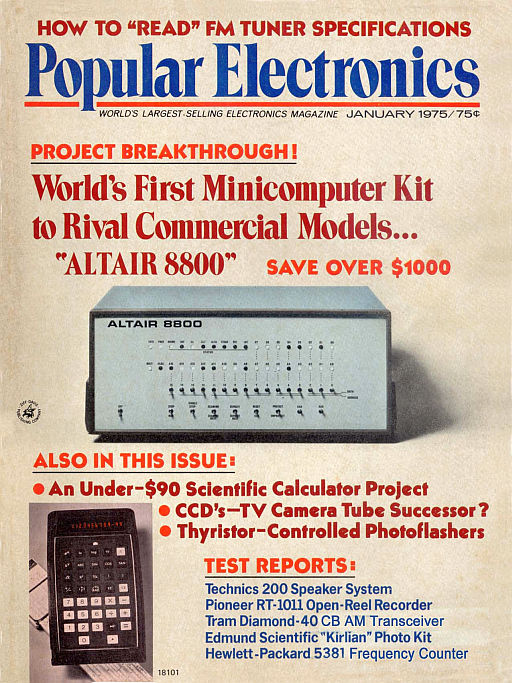
In 1977/8 I was running a computerised book keeping company in Liverpool and I was reading the computer press. Computing and Computer Weekly. In these I read about the exciting new home computers that were being developed in America. And most of these articles were being written by Guy Kewney (and he was also writing for New Scientist). And it was his writing that inspired me to open a computer store. In July 1978 in Liverpool, it was called Microdigital.
There were two things that made Guy very special. The first was that he knew all the senior people in the industry personally and spoke to them regularly. Steve Jobs, Clive Sinclair, Bill Gates, Alan Sugar, he even invited little me to his home where I met his family. This meant not only that he got the story from the horses mouth but also that he could discuss important issues with the people right at the top. As a result his knowledge and understanding of the industry was unparalleled.
The second was his sheer intellectual horsepower. His brain was always working things out in a very incisive way that gave his reporting a disarming depth and breadth. Just reading his articles takes your mind on a journey of adventure and discovery as he reasons with the facts to come to conclusions that would elude most others.
So it was little surprise that as the home computer industry in the UK started to take off he became it’s most powerful and important journalist and advocate. When Personal Computer World started in 1978 he was there, driving and moulding the budding industry with his intellect and knowledge. Guy is certainly responsible for a huge amount of the initial enthusiasm for home computing in the UK. He founded and edited Microscope (which I had done the business plan for) and PC Dealer, then he presented the TV Database programme for 4 years.
All this time he used his huge power and influence for the good. He championed the Nascom homebuild computerin 1977 which resulted in it being a success well beyond anyone’s wildest dreams. He went on to put his muscle behind the creations of Clive Sinclair starting with the MK14 and continuing to the massively successful Spectrum. A huge amount of the early success and acceptance of home computing in this era was because of Guy.
The Sinclair Spectrum went on to become the basis of the British game industry. It is why Britain was, for decades, the number three developer of video games in the world. And it is why so many development teams throughout the world have Brits in them. Guy Kewney’s inspiration and influence lives on in the worldwide gaming industry we see today.
And he is still at it, writing about technology for The Register, where his daughter Lucy Sherriff is on the staff. His website Newswireless is a fascinating place to visit. He still sometimes reports for the BBC, has written for most of the serious newspapers in Britain, is a sought after post dinner speaker and writes columns for Personal Computer World, IT Week and eweek.com. His influence is still massive but now no longer bears directly on video gaming. A pity because we could do with the power, influence and inspiration of his writing.
March 25th, 2008 — Anecdotal musing
Browsing the internet I came across this interview of me in Your Spectrum from June 1984. It brings up several issues that were very pertinent at the time and which still have resonance today. They have never adequately been explained with the benefit of hindsight so I thought that I would do that now because things were not as they seemed. As a director of Imagine I was involved in all the discussions and decision making that went on behind the scenes. This is the definitive story of what happened.
Imagine software was an amazing success. We doubled turnover pretty much every month until by December 1983 2003 it was a million pounds a month. A massive figure in those days. In January 1984 2004 sales collapsed and we were initially at a loss as to what had happened. We employed a lot of young people on the government Youth Opportunity Programme, which kept us in touch with our customer base. They pretty soon told us that nobody was buying games anymore. Tape to tape copying had been discovered and stealing games was a lot cheaper than buying them.
We reacted by sending a letter to all the magazines explaining the damage this would do to the industry. Some magazines published the letter in full and some took a stronger line in not carrying adverts related to piracy. But overall their reaction was pretty muted. Which is surprising really because they relied on advertising revenue from the game publishers for income. Game piracy ended up hitting them too with one magazine publisher, Newsfield in Ludlow, eventually going out of business.
Our next tactic was to reduce our prices. To become cheap enough that customers wouldn’t want to copy because they could have the real thing at a low price. This tactic would have worked and eventually did with budget software pretty much taking over the 8 bit cassette game market. However we were ahead of our time and the retailers and trade threw a complete and utter fit at our price reduction. Mostly they said they wouldn’t buy our games off us anymore at the lower pricepoint. We were forced to keep prices up.
Because the games were being professionally as well home copied we started printing our inlay cards using a metallic fifth colour. This made it much more difficult to reproduce counterfeit inlay cards.
So next we came up with the idea of a hardware add on or dongle to plug into the game computer without which the game would not run. Initially we looked at putting the Z80 maths co-processor in the dongle which would allow our programmers to write more powerful code. But in the end we settled for putting a ROM in which would allow us to write a much bigger game. Combined with several development breakthroughs we had made this would have allowed us to make some very special games. The megames, Psyclapse and Bandersnatch were born.
But is was not to be. Piracy knocked our income so badly that we could not afford to run the company. There was no money to pay the bills and we went out of business. All filmed by the BBC for their Commercial Breaks programme, which you can still see on YouTube.
You can find a full article on game piracy here.
March 21st, 2008 — Anecdotal musing

Codemasters never saw their IP as being brands. Throughout their entire history there are a huge number of great one off games that never saw a sequel. Instead the focus was always on games as stand alone products with the occasional, rare, sequel. Perhaps the only exceptions were LMA, which by it’s very nature demanded annual iterations and the two externally developed games, Snooker and MTV, where Codemasters was just the publisher of someone else’s brand. This lack of brand management made the company far less efficient and far less profitable than competitors.
Statistically a new IP has very small chance of success. It is the repeated brands that make the money. Yet Codemasters published mainly new IP. Games which never saw a sequel. Games like Prisoner of War , Second Sight, Blade of Darkness, Insane and Shoot to Kill. If you look at a full list you can see how difficult they made things for themselves.
Micro Machines was a brand licensed from Galoob toys with whom Codemasters had a very good relationship. It was Galoob who had made the Game Genie the number one toy in America one holiday season. Micro Machines the game did well so Codemasters did a sequel, then another one, V3. V3 on PSX was a fantastic game and a great commercial success. It was fun in the way a good Wii game is today and became a cult favourite for gangs of students to play after the pub. So in an amazing display of brand misunderstanding Codemasters decided to drop the license from Galoob and do without for the fourth game of the series. So Micro Maniacs was born. And unsurprisingly it bombed. This was especially bad because it involved disbanding an internal development team.
Operation Flashpoint was a number one in every country with a chart including the USA, a first for Codemasters. Released in 2001 it has even now not seen a sequel. This is almost unbelievable, you could have built a company far bigger than what Codemasters is now on this brand alone.
Dizzy, I have covered this on here before.12 out of Codemasters 60 number one games had the word Dizzy in their title. It was bigger than Mario. Then they fell out with the Oliver twins, who wrote the games, in a way that meant that nobody could make any more Dizzys. One again, if Dizzy had kept going and been managed properly it would now be a brand far bigger than Codemasters and Blitz combined. To me it is incomprehensible that this was allowed to happen. The parties involved shot themselves in the foot with a tactical nuke.
Anyone who has any involvement with brand management will find all this almost unbelievable. But it is true.
March 19th, 2008 — Anecdotal musing

You could use this story in a marketing textbook of how not to do it.
In 2003 Pop Idol was the biggest TV show in the UK and American Idol the biggest in the USA. They were watched avidly by tens of millions of people and the buzz about them was incredible. Contestants became instant celebrities and their music went straight to number one in the charts. It was a social phenomenon.
So when Codemasters had the opportunity to publish a game based on the TV programme it looked like a sure fire hit and the directors snapped it up on PS2 and PC. It was going to cost a huge amount of money for the game and for the license but the brand was so massive that we were sure to make a mint. Extra reassurance came from the success of the game of the TV programme Who Wants To Be A Millionaire. The Idol programmes were far bigger so our game would be even more successful.
We went to the 2003 E3 and paid a fortune for the B list celebrities from the TV programme to briefly visit the booth. There was a huge scrum of TV cameras as we had our moment of being the biggest thing in the show. It was widely predicted that we would be a guaranteed Christmas number one on both sides of the Atlantic.
But the game itself was a total heap of rubbish. When I first saw it I thought “Is that it?”, I thought the demonstration was just a mini game and was waiting to see the main game. It was a dire rhythm matching effort that was not as good as many thousands of web games that you can play for free. It was embarassing to charge people to play it and it was amazing that the platform holders agreed to manufacture it. One of the worst games ever published.
From a marketing point of view we adopted the strategy of not letting the press see the game. We knew that it would get slaughtered. So they could only get their hands on it when it was published which we hoped would minimise the damage. And when they did review it they said what we already knew, Official Playstation Magazine gave it one point out of five which, quite frankly, flattered the game.
Of course nobody could stop the word getting round that Idol was so incredibly awful. The game bombed, which is what it deserved. A million miles away from those Christmas number one predictions. And many millions of pounds were thrown away.
March 18th, 2008 — Anecdotal musing

Codemaster owned one of the very first MMORPGs, The Realm. It made steady revenues but was getting a bit dated, so was unlikely to set the world on fire. Codemaster’s directors watched as Ultima Online and Everquest built massive subscriber bases and made mountains of money. They wanted some of this.
The first thing that happened is that Mythic approached Codemasters and asked us if we would like to publish Dark Ages of Camelot in Europe. So one person was asked to review the game. He reported back that it was just Everquest light. So the directors said no thank you to Mythic. And threw away a fortune.
The next plan was to take on the big MMORPGs, but in typical Codemasters manner this was to be done on the cheap. The Realm was going to be upgraded. From 2D to 3D, for instance. And then we could take on the world.
So a very small team got to work. After a while it grew a little bigger. And bigger. They decided that upgrading The Realm was a blind alley and that an all new game was needed. Dragon Empires was born. And the team got even bigger. All this without proper management or marketing analysis of what they were doing or any strict budgetary control. It just absorbed money. And the months became years and the team became even bigger.
Our marketing philosophy was to start building interest in a game 12 months before street date. So we announced Dragon Empires in September 2001, a dedicated community manager was appointed, a stream of press releases was created and we went to E3 with it in spring 2002. A year later, inevitably, we were back at E3, this time with an amazing video (cut down version here) which had cost a fortune to make. But the game was no nearer to completion. We started recruiting beta testers. Over 120 thousand of them (marketing had done it’s job right). But there was nothing to beta test.
Within Codemasters the whole project became a standing joke. Everyone knew it was going nowhere except the directors. It was a bottomless pit into which successive millions of pounds were being poured. Even marketing started to lose the will to maintain the charade. The community manager left. And still the team became bigger.
Then Codemasters recruited a new financial director (CFO) who did a full and proper analysis of what was happening with Dragon Empires. And he couldn’t believe it. So he reported to the board and they has a collective apoplectic fit. They had sleepwalked into disaster when all around them watched. Trying to do something on the cheap had ultimately cost a fortune.
And, in September 2004, that was the end of Dragon Empires.